Sensing a huge opportunity in the healthcare sector during the Covid-19 pandemic and its aftermath, private equity (PE) players are upping their investments in the space. According to data from research platform VCCEdge, the PEs have together invested a staggering $583.82 million in the first five months of 2021 in five deals, which is the highest investment in the sector in the last five calendar years - from 2016 to 2020. The second highest investment in the sector took place in 2017, when PEs invested $503 million in 18 deals, with an average deal size of $29. 9 million.
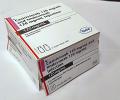
According to medical practitioners, the treatment is especially useful in controlling disease among those who have not received the vaccine or got only one shot and also the high-risk contacts of a patient.

Raches Ella, project lead, Covid-19 vaccines at Bharat Biotech said in a series of tweets that he was 'surprised' that media and researchers were drawing conclusions based on non-peer reviewed work.

'Almost 70 per cent production time of a vaccine is dedicated to quality control, which is done through several hundred tests.'
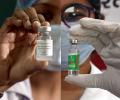
The study by a group of doctors showed that after two shots of the vaccines, 98 per cent recipients of Covishield showed antibody response, while the same was 80 per cent among Covaxin recipients. Sohini Das and Ruchika Chitravanshi report.

Providence will sell up to 30 mn doses of its mRNA vaccine to Biological E. It would also provide the necessary technology transfer to make the vaccine in India, with a minimum production capacity of 600 mn doses in 2022 and targets capacity of 1 bn doses, reports Sohini Das.
500 million doses per annum from its two sites in Hyderabad and 200 million doses each from its Ankleshwar and Kolar facilities.
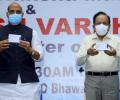
Commercial launch and supply to major government and private hospitals is expected in mid-June.

To create a community, the consumer can share the details of the offer with friends and family who want to buy the same goods.

Pune's Mylab Discovery Solutions' CoviSelf, which gives results in 15 minutes, gets ICMR nod

Based on industry estimates, telecom companies, including Bharti Airtel, Reliance Jio, Vodafone Idea and BSNL, are expected to invest over $10 billion on buying 5G telecom equipment in the next five years as they transition from non-standalone networks to standalone 5G networks.

The Telecom Regulatory Authority of India (Trai) has directed the Cellular Operators Association of India (COAI) to make a presentation detailing the pros and cons of the controversial Indian 5G standard, also known as 5Gi, which the government has been pushing for. The move comes after serious differences emerged among telcos with regard to the technology's efficacy and implementation.

However, Cipla was very clear it does not want to get into vaccine manufacturing.
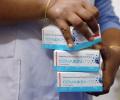
This apart, to further increase capacities, Bharat Biotech has partnered with Indian Immunologicals (IIL) to manufacture the drug substance for Covaxin. The technology transfer process is underway and IIL has the 'capabilities and expertise' to manufacture the inactivated viral vaccines at commercial scale.
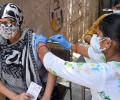
India expects 2.16 billion doses of Covid-19 vaccines between August and December, including the jabs that are currently in clinical trials, reports Sohini Das
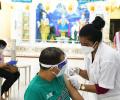
Apollo Hospitals and Fortis Healthcare are open to importing vaccines.

The API of Paracetamol, a fever and pain medication, has grown 25 per cent from Rs 450-480 per kg in December 2020 to Rs 580-600 per kg in April. When compared to the pre-Covid prices of December 2019, the surge is much steeper -- around 140 per cent, reports Sohini Das.

Drugs that are used to treat Covid or used by people as immunity boosters have seen a jump in sales and, in turn, rankings.

While there is a shortage of testing kits, manpower and capacities, India does not have other scalable testing options.
'This government did not have any plan for safety stocks of essential medicines.'
